 Borgmann Aquaponics Hydroponics


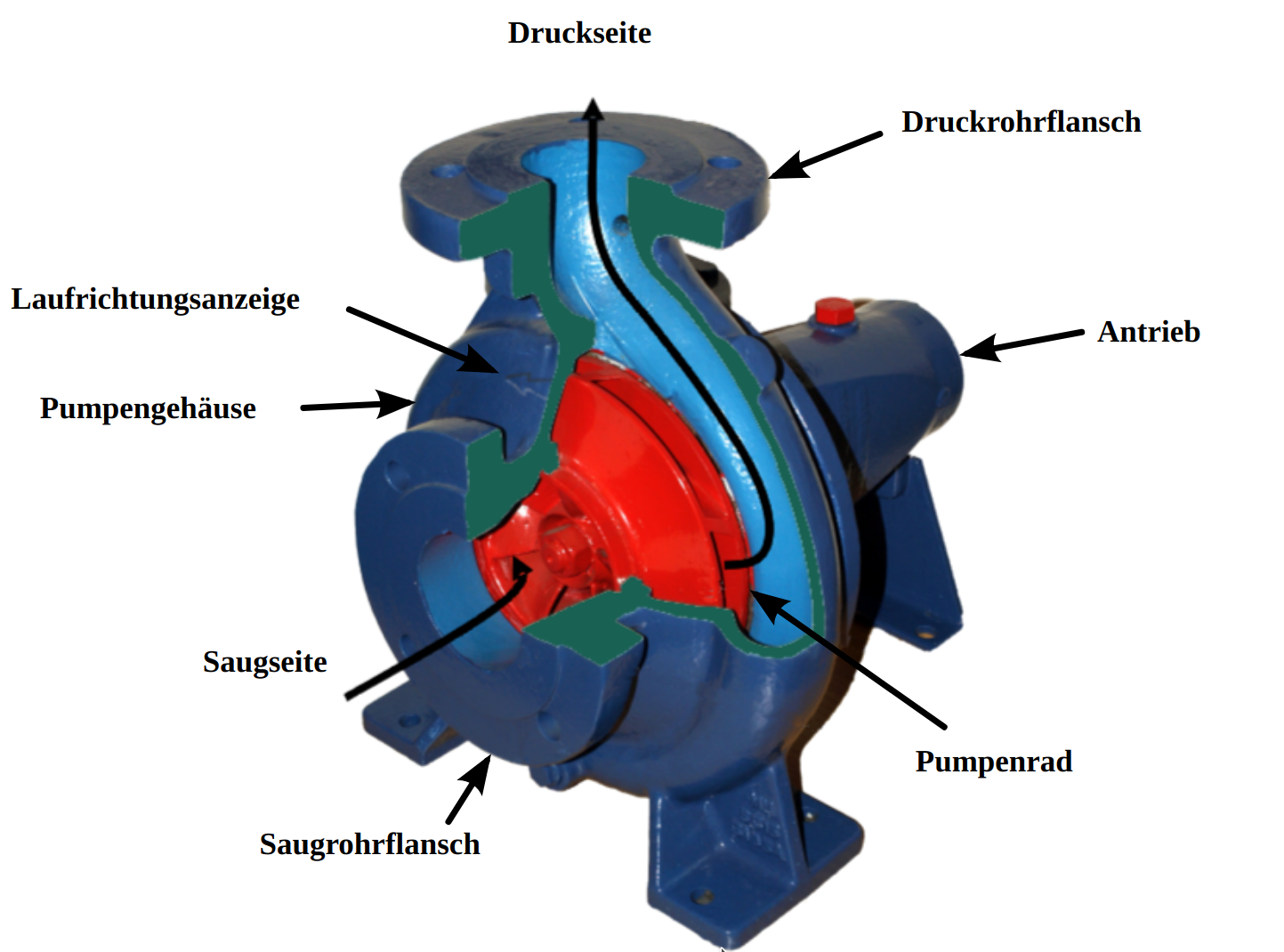
Differential Pressure Control
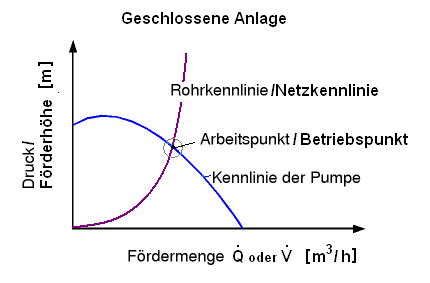
Here, the speed and power are automatically adjusted to the demand for circulated water. The pressure difference between the suction and discharge sides is determined, and the motor speed, and thus the power, is controlled to keep the differential pressure as constant as possible. The differential pressure is system-specific and is caused by the friction of the circulated water flow against the pipe walls and by changes in direction at each elbow.
The required differential pressure is often specified for electronically controlled pumps as the delivery head in the unit Meter Water Column (mWC), which has not been legally compliant since the late 1970s. 10.2 mWC corresponds to 1 bar. In closed systems, this does not refer to the system height, but is merely a measure for overcoming the flow resistance of the entire system at a given flow rate.
Flow-Dependent Differential Pressure Control
Here, the setpoint of the differential pressure is changed depending on the volume flow. This control takes into account that, depending on the demand (heat energy consumption), a different amount of warm water is required in the heating system to provide the necessary heat output in the house connection stations. It is worthwhile for circulation pumps that supply larger heating networks and therefore have a high energy requirement (from 5 kilowatts electrical). In such cases, the friction losses of the water due to circulation in the piping system play a greater role.

Energy-Saving Circulation Pumps
Particularly energy-saving circulation pumps (high-efficiency pumps) with automatic electronic control down to 5 watts are more expensive to purchase than conventional circulation pumps with a constant power consumption of 40–100 watts, but this can be amortized through lower electricity consumption. Between 2005 and 2012, there was an energy label for circulation pumps. Since 2013, Regulation (EU) 642/2009, issued under the Ecodesign Directive, has made binding specifications regarding the energy efficiency index of circulation pumps. Corresponding models are marked with the abbreviation "ErP ready".
Since many pumps are usually in continuous operation with constantly high power consumption during the heating period, they are, alongside outdated, poorly insulated refrigeration appliances, the main cause of increased electricity consumption in households. A heating pump can remain in operation for up to 20 years. With an operating duration of around 7 months per year (210 days = 5040 hours), an old circulation pump with a power consumption of 85 to 130 watts requires 428–655 kWh of electrical energy – whereas a controlled high-efficiency pump (7–25 watts power) only requires 35–126 kWh.[3] If 400 kWh are not consumed per heating period, a high-efficiency pump saves 108 euros in energy costs annually at an electricity price of 27 ct/kWh. That amounts to 1,620 euros over an assumed service life of 15 years – not including interest or electricity price increases.
Source, among others: https://de.wikipedia.org/wiki/Umw%C3%A4lzpumpe_(Heiztechnik) (Link to German Wikipedia article)
Keywords:

Add Comment