

Climate Zone
As a guide for the temperatures at which the hydroponic part cannot be heated (greenhouse) or operated outside, the temperature ranges for all plants are given in the specialist literature. Usually you only differentiate between hardy or not. According to the vegetation cycles, this also results in an optimal time for setting the respective plant. There is one for this genetic climate classification, that provides this geographic location information. We use the standardized USDA scale for the information we use. Here is a climate overview of Europe and Central Europe:
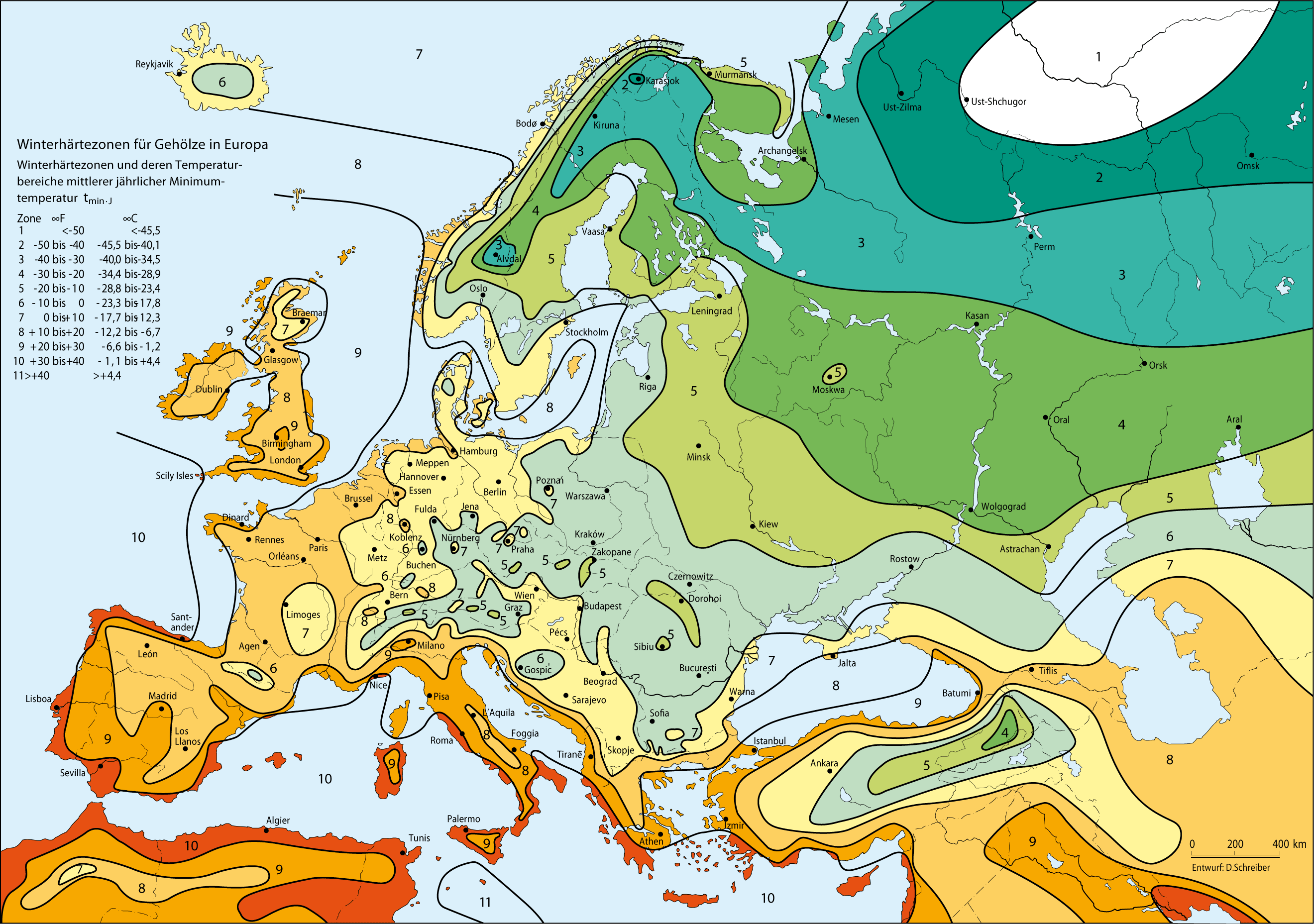
Source: https://www.jelitto.com/out/media/winterhaertezonen/europa/WHZ-Europa-big.gif
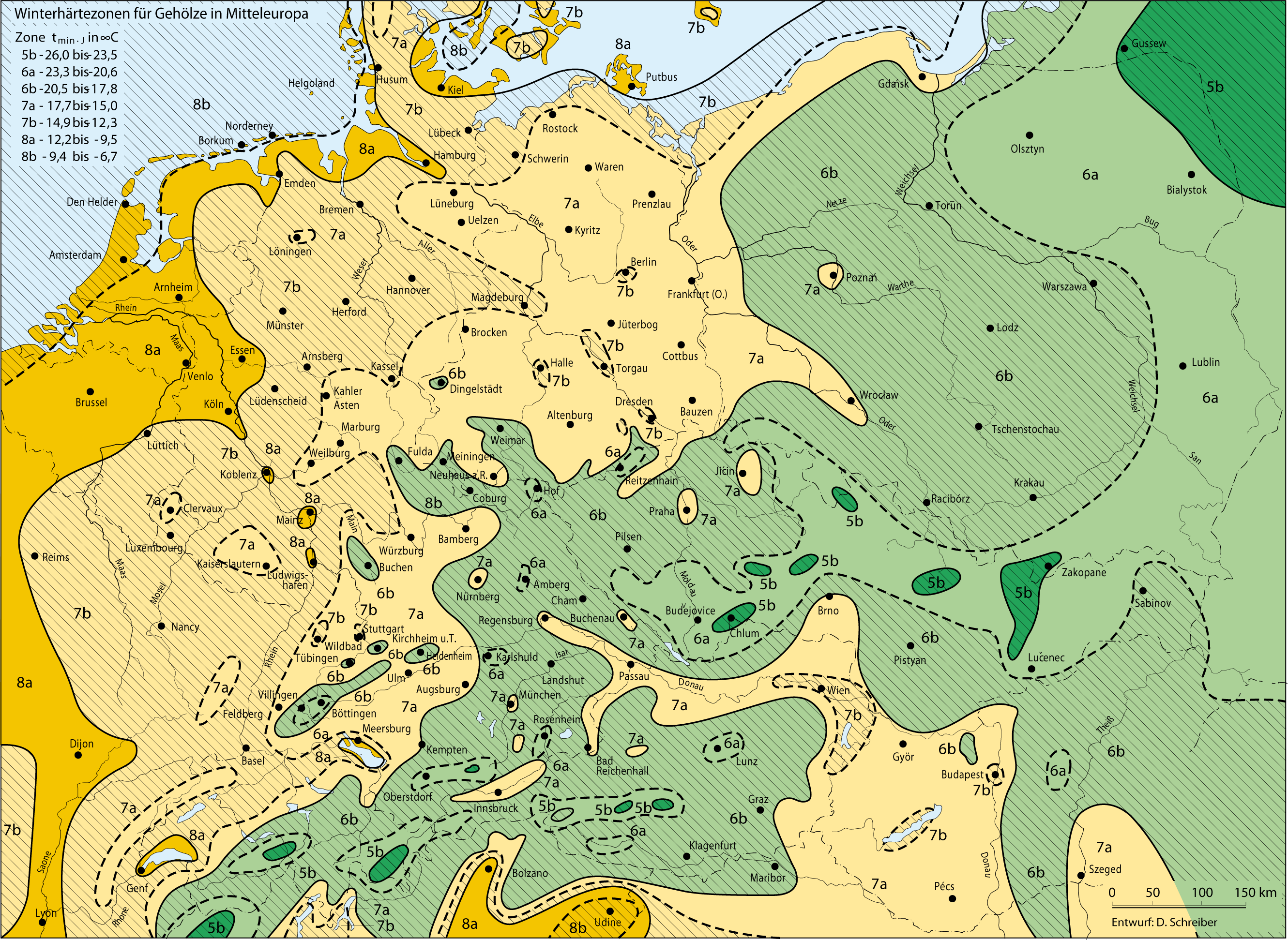
Source: https://www.jelitto.com/out/media/winterhaertezonen/europa/WHZ-Mitteleuropa-big.gif
There is also a card for the USA. This is created by the government.
USDA climate zones, precisely USDA Plant Hardiness Zones, are a climate classification of areas based on the average lowest annual temperature, published by the US Department of Agriculture (USDA). This classification is very helpful in determining which plants can be grown in certain areas.
The zones range from 1 (from − 60 ° F, approx. − 51.1 ° C) for polar regions up to 13 (up to 70 ° F, approx. 21 ° C) for the tropics, each in steps of 10 ° F (≈ 5.5 ° C). The zones can be divided into half steps a and b, each comprising 5 ° F (≈ 2.8 ° C).
They are an international standard for the classification of the winter hardness of plants. There is also a list of indicator plants, which is divided into zones in which these plants can just survive.
The map [see below] for the USA was first launched in 1990. It was based on an averaging period 1974 – 1986. In order to do justice to global warming, this map was created in 2012 and related to the 30-year period 1976 – 2005. The individual zones moved less than a hundred kilometers to the north, in one place the zoning changed on average by about a 5- ° F half zone.
Zone division

.jpg)
|
|
||||||||||||||||||||||||||||||||||||||||||||||||||||||||||||||||||||||||||||||||||||||||||
Source, and others: https://de.wikipedia.org/wiki/USDA-Klimazonen
Genetic climate classification
|
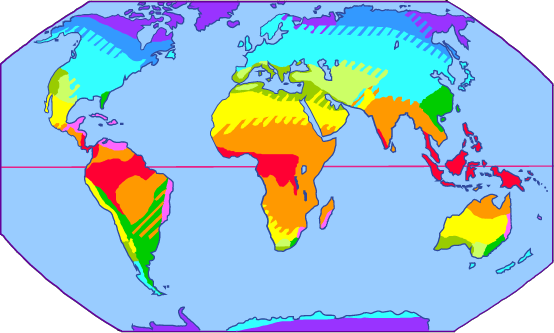
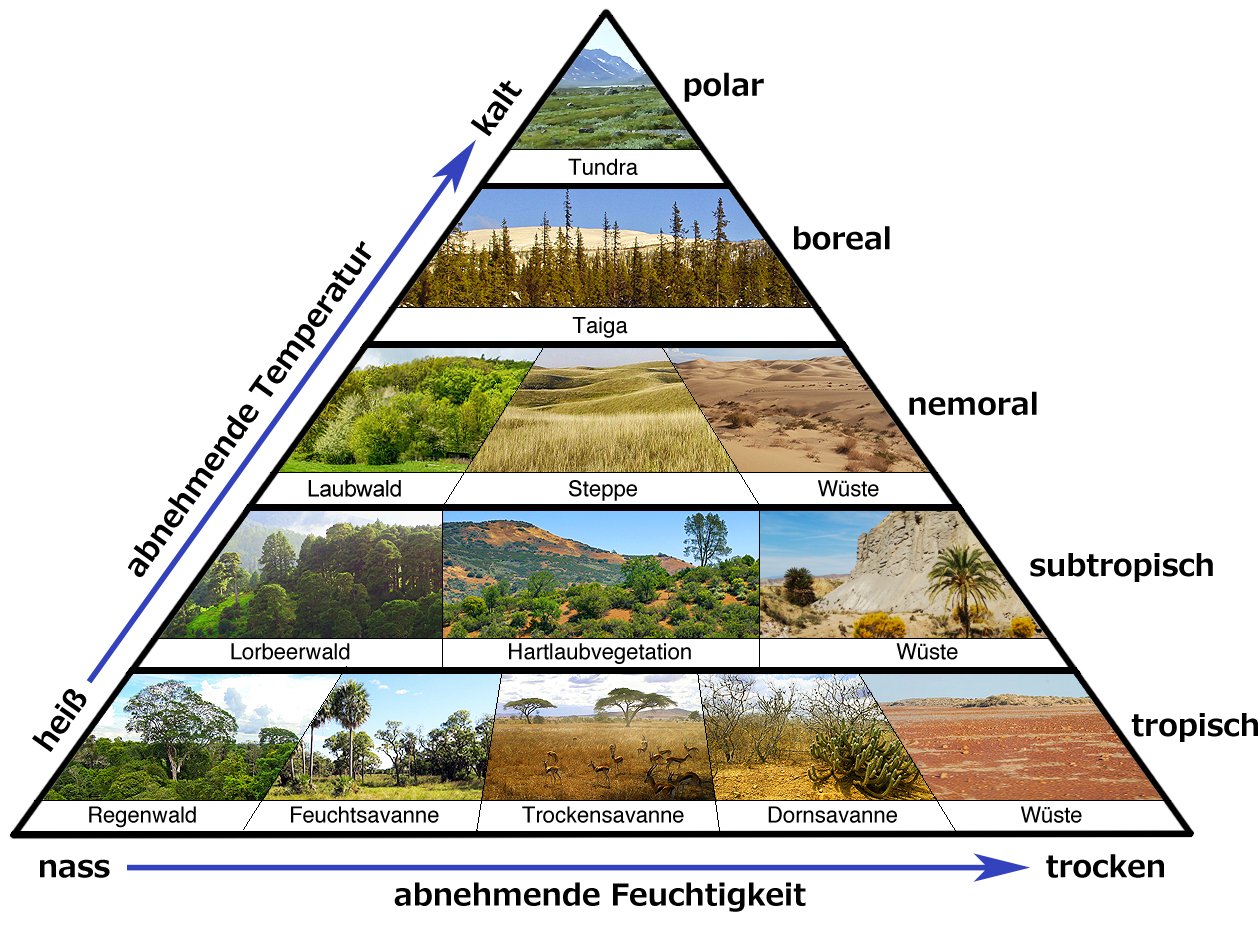
A genetic climate classification is the division of the Earth into regions with comparable climate conditions by using large-scale climate factors (such as solar radiation, winds, air masses and weather fronts). Thus, the focus is on the origin (genesis) of the climate, and the individual climate regions are qualitatively derived from their location in the Earth's climate system. In contrast, for effective climate classification, the individual climate regions are made up of local climate elements and their effects (e.g. B. typical vegetation) derived. Modern integrative climate classifications combine both methods. |
Source: https://de.wikipedia.org/wiki/Genetische_Klimaklassifikation |
CC BY-SA 4.0, From Fährtenleser, CC BY-SA 4.0, https://commons.wikimedia.org/w/index.php?curid=128106709
Add Comment