 Borgmann Aquaponics Hydroponics


In order to keep plant growth and the growth conditions for fish farming within an optimal range, various measurement techniques are required. In the field of plant cultivation, a completely different approach is needed compared to fish farming. In addition, plants naturally go through various growth phases, each of which may require a partly entirely different fertilization (nutrient supply). The same naturally applies to fish.
Furthermore, nutrients influence each other depending on their concentration. In some cases, this can lead to a blockage in the uptake of certain substances. And even the deficiency symptoms that plants show are easy to confuse despite having different causes. Here is an admittedly tricky example:
Calcium deficiency: Necrotic (dead) brown spots between the leaf veins that are unevenly distributed.
Boron deficiency: Necrotic brown spots between the leaf veins that appear patch-like.
Calcium deficiency can be confused with boron deficiency. A calcium deficiency blocks the uptake of boron.
So, from the room for interpretation (spots/patches) to the maximum possible misinterpretation, you have the full spectrum.
For nutrient analysis, the following techniques are available depending on the desired handling and the substances to be tested, among others.
· Photometry refers to a measurement method in the wavelength range of visible light using a photometer.
· Titration allows the quantity of a substance to be determined using a standard solution (a solution of substances whose composition and concentration are precisely known).
· Colorimetry determines information about the contents through color analysis.
· Chemiluminescence detects the presence of the smallest concentrations down to individual molecules.
· ISE serves as a sensor for the concentration or more precisely the activity of a specific dissolved ion.
· Voltammetry is an electrochemical analytical method.
Technology
All measurement technology used by us is based, where already available, on industry standards. In some cases, reliable measurement technology for the field of aqua- and hydroponics is not yet available or not yet standardized. In these cases, we develop appropriate measurement systems based on existing technology. We also develop our own measuring instruments for related but specialist fields such as arable farming, for example tensiometers.
Aquaponics
In aquaponics, a large number of substances arise that can significantly disturb the hydroponic part of the system — quite apart from the possible poisoning of the fish due to an excess of ammonia. Since it is a closed system that also requires a certain "running-in period" to reach equilibrium with the biofilters, a precise analysis of the contents is essential.
In this area, continuous monitoring of nitrate, nitrite, oxygen content, and ammonia is mandatory. In this segment there are various suppliers that differ in price based on quality and durability. Please contact us.
Hydroponics
The substances and their concentration in the nutrients determine quality and yield. Depending on the plant and its growth phase, a precise amount of certain substances is decisive. Here, in addition to the standard sensors, special attention is paid to the substances important for plants, including: nitrogen, phosphorus, potassium, calcium, magnesium, sulfur, iron, manganese, boron, zinc, copper, and molybdenum.
There are also a large number of trace elements that can easily be analyzed by photometry, including: Al2(SO4)2, KJ, KBr, TiO2, SnCl2, LiCl, MnCl2, B(OH)3, ZnSO4, CuSO4, NiSO4, Co(NO3)2. These are generally monitored using analysis kits (test strips, titration, litmus strips, etc.) or by photometry when very small quantities are involved. See also the article on fertilizers and deficiency symptoms.
Photometry
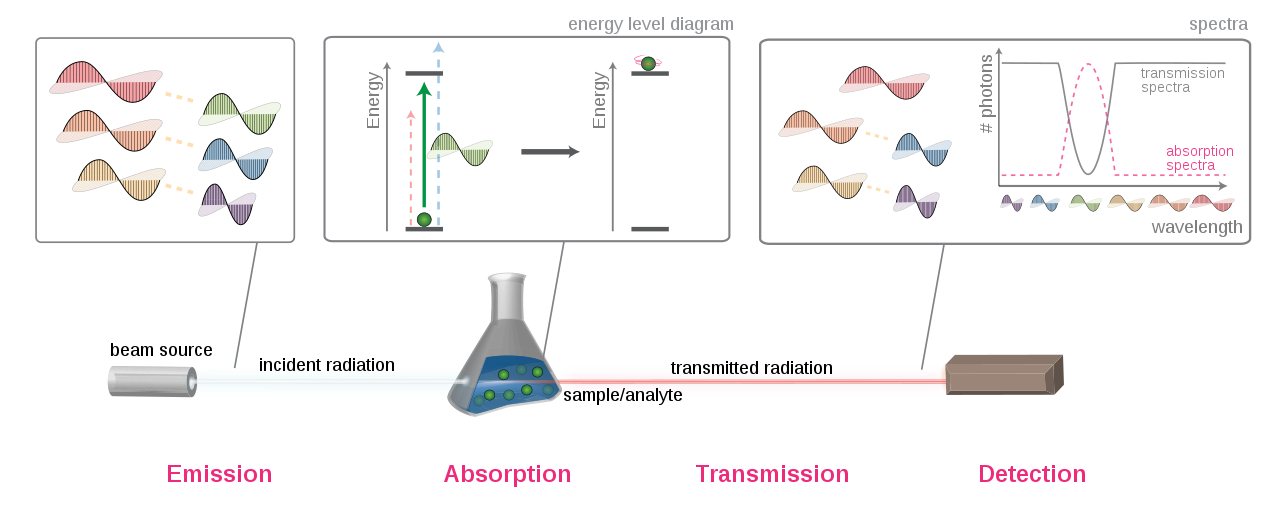
Photometry is a technique that allows the smallest quantities of substances to be tested cost-effectively. For this purpose, a few milliliters of the nutrient solution are filled into a cuvette and analyzed by the photometer. Some manufacturers offer pre-made reagents for this purpose, with which the desired substance can be measured in the photometer. As a guide, here are some price examples from a well-known photometer manufacturer:
Boron: measurement range 0.05-2.5 mg/l, reagent for 25 tests: €121.00 / €4.84 per test.
Manganese: 0.005-0.5 mg/l, reagent for 50 tests €145.00 / €2.90 per test
These tests are carried out at regular intervals to monitor the nutrient supply to the plants. If certain substances occur in too high or too low a concentration, they can even impair plant growth so severely that the plants perish. Here is a brief excerpt on the interactions between minerals.
By: Jon Chui

Add Comment