 Borgmann Aquaponics Hydroponics


Soil is the most important means of production in the permaculture garden. Healthy soil needs no synthetic fertilizers, largely regulates water balance and pH itself, and nourishes plants through a dense network of fungal hyphae, bacteria, earthworms, and soil organisms. This article explains how compost, raised beds, and mulch work together to build a permanently fertile system from exhausted or compacted soil.
1. Soil Biology as a Starting Point
Conventional deep plowing destroys fungal mycelium, aerates and oxidizes humus, and brings anaerobic soil layers to the surface. Permaculture design therefore avoids soil tillage wherever possible and replaces the plow with biological loosening: deep-rooted plants like radish, sunflower, and comfrey open up compacted layers; earthworms create cavities and worm castings.[2]
2. Composting
2.1 Principle and Process
Composting is the controlled aerobic decomposition of organic matter by microorganisms. The end product, mature compost, is humus-rich, crumbly, odorless, and contains nutrients in slowly plant-available form. The speed and quality of the process depend on four parameters: carbon-to-nitrogen ratio (C/N), moisture, aeration, and particle size.[3]
| Parameter | Optimal Range | Consequences of Deviation |
|---|---|---|
| C/N ratio | 25:1 to 30:1 | Too high: slow decomposition. Too low: ammonia development, odor. |
| Moisture | 50–60% | Too dry: process stops. Too wet: anaerobic, putrefaction, odor. |
| Temperature | 55–65 °C (hot phase) | Below 55 °C: weed seeds and pathogens survive. |
| Particle size | 1–5 cm | Too large: slow decomposition. Too small: compaction, lack of air. |
| Aeration | Turning every 3–5 days (hot) or passive (cold) | Insufficient: anaerobic zones, putrid odor. |
2.2 Hot Compost and Cold Compost Compared
The hot compost pile is filled in one batch with sufficient material (minimum volume approx. 1 m³) to raise the core temperature to 55 to 70 degrees Celsius. In this temperature phase, weed seeds, fungal spores, and pathogens are killed. Regular turning (every three to five days) maintains the aerobic process. Maturation time: four to eight weeks.[3]
Suitable for: Larger gardens with sufficient quantities of green cuttings and kitchen waste; operations with small animal manure input.
Cold compost is filled continuously and is rarely turned. Temperatures remain low; decomposition occurs slowly through mesophilic microorganisms and earthworms. Advantage: low labor input. Disadvantage: weed seeds and pests survive; therefore, the compost material should not contain diseased plant parts or seed heads. Maturation time: six to twelve months.[4]
Suitable for: Small gardens, balconies (as worm bin), households with little green waste and limited time.
2.3 Input Materials: Browns and Greens
The C/N ratio is controlled by mixing carbon-rich (brown) and nitrogen-rich (green) materials. A rule of thumb: three parts brown to one part green, measured by volume.
| Brown Materials (C-rich) | Green Materials (N-rich) | Not Suitable |
|---|---|---|
| Straw, hay (aged) | Grass clippings (fresh) | Meat, fish, dairy products |
| Wood chips, sawdust (untreated) | Kitchen waste (raw, vegan) | Diseased plants with fungal infestation |
| Autumn leaves (shredded) | Fresh plant residues, green cuttings | Weeds with mature seeds (cold) |
| Cardboard, newspaper (unprinted) | Animal manure (chicken, rabbit, horse) | Treated wood, glossy paper |
| Grain straw | Coffee grounds, tea bags (without plastic) | Citrus peels (cold compost, inhibits worms) |
2.4 Vermicomposting
Vermicompost is the highest quality compost product. Composting worms (Eisenia fetida) process organic material faster than purely microbial processes and produce a humus with particularly high microbial activity and plant-available nutrient concentrations. Worm bins are suitable for balconies, basements, and small households and process up to half a kilogram of kitchen waste per 1,000 worms daily.[5]
3. Raised Beds (Hügelkultur)
3.1 Principle
The raised bed is a combination of soil improvement, water retention, and long-term fertilization. It is built from layered organic materials: wood pieces and branches as the core, turf, straw, compost, and soil as successive layers. As the wood core decomposes, cavities are created that store water; the decomposition itself generates heat, which extends the growing season, and nutrients, which are released over years.[6]
3.2 Construction Step by Step
- Marking and preparation: Mark out area; cut out turf and set aside (reuse with grass side down).
- Wood core (Layer 1): Place coarse branches, trunk pieces, wood slices. Wood can be fresh or weathered; hardwood decomposes slower (up to 10 years), softwood faster (3–5 years).
- Turf (Layer 2): Place removed turf with grass side down on the wood core. Prevents growth through and provides nitrogen.
- Biomass (Layer 3): Green cuttings, leaves, straw, untreated kitchen waste; layer thickness 15–20 cm.
- Compost (Layer 4): Mature compost or manure, 5–10 cm. Inoculates the system with microorganisms.
- Soil (Layer 5): Excavated or added garden soil, 15–20 cm. Forms the actual planting substrate.
- Covering: Apply mulch (straw, wood chips) immediately after construction to prevent drying out and erosion.
- Watering: Water the raised bed thoroughly during construction to start decomposition processes.
3.3 Development Over Time
| Year | Condition | Suitable Crops |
|---|---|---|
| 1–2 | Strong decomposition, high nitrogen release, settling of the bed by 20–30% | Nitrogen-hungry crops: squash, zucchini, maize, cucumber, cabbage |
| 3–4 | Decomposition slows, balanced nutrient profile, good water retention | Tomatoes, beans, peppers, carrots, celery, all herbs |
| 5–7 | Wood core largely decomposed, bed sunk, high-quality humus | All crops; particularly suitable for root vegetables and strawberries |
| From year 8 | Flat bed with humus-rich, well-structured soil | Rebuild or continue using as a normal flat bed |
3.4 Raised Bed and Water Balance
The water retention property of the raised bed is one of its most important features, especially in climates with irregular rainfall (USDA zones 9 and 10). The decomposed wood core acts like a sponge: it stores rainwater and releases it slowly during dry periods. Measurements on established raised beds show that water demand can be reduced by up to 30% compared to flat beds.[6]
4. Mulch
4.1 Functions
Mulch refers to any soil covering that reduces evaporation, stabilizes soil temperature, inhibits weed growth, and protects soil biology. In permaculture, bare soil is the exception; the guiding principle is: nature does not allow bare soil. Mulch replaces the natural leaf layer of the forest floor.[2]
Straw, wood chips, grass clippings, leaves, and compost cover the soil and decompose over the course of the season. They improve soil structure and provide nutrients. Wood chips bind nitrogen for their own decomposition in the first year; therefore, do not apply them fresh to vegetable beds, but compost them first or use only between woody plants.[4]
Layer thickness: 5–10 cm; renew annually.
Low-growing ground covers such as white clover, thyme, strawberry, or winter purslane are sown or planted as underplantings between main crops. They shade the soil, sometimes fix nitrogen (clover), attract beneficial insects, and reduce weed competition. Living mulch systems are linked thematically in Article 3 (Polycultures).[7]
Suitable for: Zone 2 and 3; under fruit trees and in perennial crops.
4.2 Sheet Mulching: Soil Building Without Digging
Sheet mulching is a method for converting lawn areas or weedy beds into productive garden areas without soil tillage. The technique dates back to the work of Esther Deans in Australia and was further developed by Mollison and Toensmeier.[8]
- Mow the area or cut existing vegetation short; do not remove.
- Apply compost (2–5 cm) directly onto the vegetation.
- Lay cardboard (unprinted, tape removed) overlapping; close all gaps. The cardboard kills the vegetation underneath and prevents weed growth for one season.
- Water so the cardboard lies flat and does not shift.
- Apply organic material (straw, wood chips, leaves) to a depth of 10–15 cm.
- Compost planting layer (5–10 cm) as the top layer; plant directly into this layer.
- In the second year, the cardboard has decomposed; the dead material underneath has improved the soil.
5. Soil Analysis as a Basis
Before starting soil building measures, a chemical soil analysis is recommended. Agricultural laboratories and garden authorities offer standard analyses that record pH, macronutrients (N, P, K), magnesium, and humus content. pH is the most important individual parameter: at a pH below 5.5, many nutrients are chemically bound and unavailable to plants, regardless of how much compost is applied. In this case, liming (ideally with ground limestone or dolomite) is necessary before soil building.[1]
| pH Range | Soil Reaction | Suitable Crops | Action |
|---|---|---|---|
| below 5.5 | Strongly acidic | Blueberry, potato (tolerant) | Liming necessary |
| 5.5–6.5 | Slightly acidic | Tomato, carrot, strawberry, herbs | Optimal; only compost |
| 6.5–7.0 | Neutral | Cabbage, bean, spinach, lettuce | Optimal; maintain compost |
| 7.0–7.5 | Slightly alkaline | Asparagus, cabbage, leek | Sulfur or coniferous litter |
| above 7.5 | Strongly alkaline | Few crops tolerant | Sulfur application, high compost input |
6. Interplay: Compost, Raised Bed, Mulch
The three methods described are not alternatives but a building system. Compost provides the microbial impulse and nutrient supply; the raised bed creates the three-dimensional structure for water retention and long-term fertility; mulch protects the soil surface and continuously renews organic matter. In a fully established permaculture Zone 2, all three processes run simultaneously and reinforce each other.
A guideline for establishing a new area: In the first year, incorporate 5 to 10 liters of mature compost per square meter or apply it as the top sheet mulch layer. From the second year onwards, an annual compost application of 2 to 5 liters per square meter is sufficient for maintenance, provided mulch is permanently maintained and organic material remains in the system (harvest residues, prunings, leaf litter).[4]
7. Outlook
Article 5 covers the herb spiral as a compact Zone 1 element that builds on the same soil-building principles while simultaneously creating different microclimates in a very small space. Article 7 (Plant Selection Tool) takes soil parameters — pH, moisture, nutrient requirements — into account as filter criteria for plant recommendations.
References and Sources
- Brady, N. C. & Weil, R. R. (2016). The Nature and Properties of Soils. 15th Ed. Pearson, Hoboken.
- Mollison, B. (1988). Permaculture: A Designers' Manual. Tagari Publications, Tyalgum. Chapter 8: Soils.
- Rynk, R. (Ed.) (1992). On-Farm Composting Handbook. Northeast Regional Agricultural Engineering Service, Ithaca.
- Whitefield, P. (2004). The Earth Care Manual. Permanent Publications, East Meon. pp. 98–127.
- Edwards, C. A. & Bohlen, P. J. (1996). Biology and Ecology of Earthworms. 3rd Ed. Chapman & Hall, London.
- Holzer, S. (2011). Sepp Holzers Permakultur. Löwenzahn Verlag, Innsbruck. pp. 44–68.
- Hartmann, P. et al. (2013). Living mulch systems in organic horticulture. Biological Agriculture & Horticulture, 29(2), 87–102.
- Toensmeier, E. (2007). Perennial Vegetables. Chelsea Green Publishing, White River Junction. pp. 21–29.
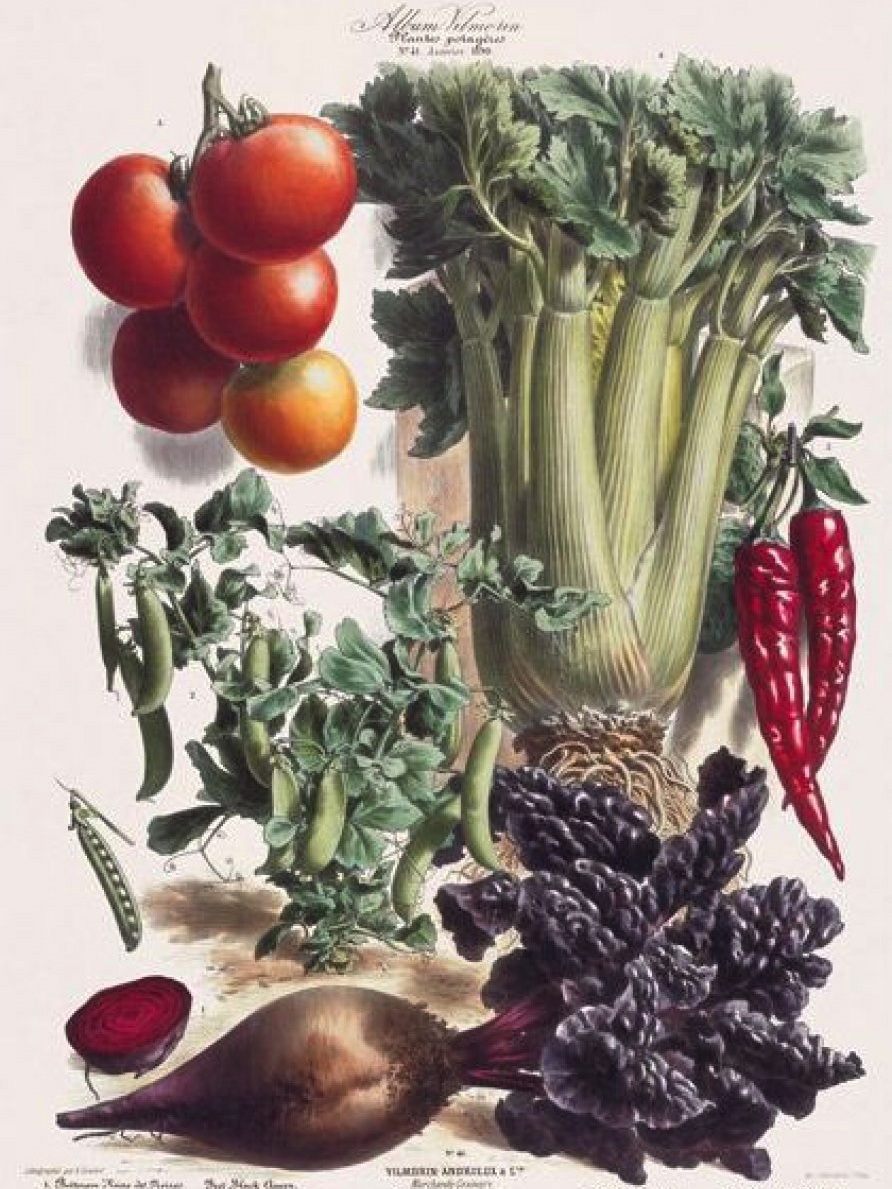
- Image: Album Vilmorin. The vegetable garden (1850-1895)
Add Comment