 Borgmann Aquaponics Hydroponics


The zone concept is one of the central planning tools in permaculture. It arranges the elements of a garden or settlement according to the frequency of human use and the associated maintenance effort. By placing frequently needed plants and tools close to the house and shifting extensively managed areas to the periphery, unnecessary journeys are reduced, energy is saved, and the system becomes permanently lower in maintenance.
1. Basic Principle: Space as a Function of Attention
From this observation follows a spatial logic: elements with high maintenance needs are placed close to the house, while rarely visited or self-regulating areas are placed on the periphery. The concept does not describe a rigid grid, but a continuum of increasing extensification from the center outward. In practice, five to seven zones are typically distinguished, with Zone 0 designating the building itself and the outer zones transitioning into semi-natural or completely self-willed areas.[2]
Note on geometry: The zones are not concentric circles on the drawing board. Topography, wind protection, existing trees, water access, and individual habits shape the actual zone geometry. A slope that is passed daily can functionally be Zone 1 despite being further away; a hard-to-reach corner close to the house can correspond to Zone 3.
2. The Zones in Detail
Zone 0 is the house, apartment, or operational building itself. In permaculture design, planning begins here: south-facing orientation for passive solar gain, insulation, rainwater harvesting from the roof, greywater recycling, and the creation of window boxes or indoor greenhouses for propagation. The building's energy balance is the first lever before designing the garden.[1]
Typical elements: Propagation windows, worm bin in the kitchen, rainwater tank at the downpipe, solar collectors.
Zone 1 encompasses areas visited several times a day: herbs for cooking, salads, radishes, tomatoes, chillies, and other plants with short harvest windows or high water needs. This zone is ideally located directly at the house exit or along a daily-used path. The shorter the path, the more likely regular care.[2]
Typical elements: Raised beds, herb spiral, propagation pots, cold frame, small compost bin for kitchen waste.
Plant examples: Basil, parsley, chives, mint, lettuce, tomato, zucchini, strawberry.
Zone 2 accommodates crops that require regular, but not necessarily daily, care. Here one finds beds with root vegetables, legumes, and cabbage varieties, as well as small animal enclosures like chicken or rabbit hutches, whose daily care is combined with visiting the zone. The spatial linkage of animal husbandry and beds uses manure in a short nutrient loop.[3]
Typical elements: Raised beds, main compost heap, chicken coop with adjacent run on beds after harvest, rain barrels.
Plant examples: Carrot, parsnip, bean, pea, broccoli, cauliflower, cabbage, pumpkin, beetroot.
Zone 3 accommodates perennial woody plants that require little care after the establishment phase: fruit trees, berry bushes, nut trees. Harvest is seasonally concentrated; between harvest periods, only occasional visits are needed. This zone is suitable for agroforestry systems where trees, shrubs, and groundcover plants are combined in layers.[4]
Typical elements: Apple, pear, plum, and walnut trees, raspberries, currants, gooseberries, elderberry; mulch strips under the trees.
Plant examples under the trees: Nasturtium, calendula, borage, comfrey as mulch provider and beneficial insect magnet.
Zone 4 is only occasionally cultivated. Typical uses are extensive grazing, timber production from coppice, wild herb collection, and the creation of ponds for water retention. Intervention is limited to what is necessary; self-regulation takes precedence over active management.[1]
Typical elements: Meadow orchards with extensive mowing, grazing fences, pond, deadwood piles as habitat structures, coppice parcels.
Zone 5 is largely withdrawn from human intervention. It serves as a reference area: here one can observe how natural succession develops without management. At the same time, this zone provides refuge for wildlife and protects the overall system as a buffer zone. In allotment gardens, Zone 5 is often just a square meter of untended corner, a pile of deadwood, or an unmown strip of perennials on the boundary.[2]
Typical elements: Benjes hedges, stone piles, untended wildflower strips, wetlands, old tree stock.
3. Zone Planning in Practice
Implementing the zone concept begins with a site analysis: where do the actual daily paths run? Which areas are instinctively avoided? Mollison recommended mapping one's own worn paths in the garden after a year of observation — they reliably show where Zone 1 actually lies, regardless of the original plan.[1]
For smaller areas under 500 square meters, Zones 0 to 2 are generally realistic, supplemented by symbolic elements of Zones 4 and 5 (deadwood piles, wildflower strips). Larger areas starting from one hectare allow the implementation of all zones, including genuine agroforestry elements in Zone 3 and grazing management in Zone 4.[3]
| Zone | Designation | Visit Frequency | Typical from area size | Degree of Self-Regulation |
|---|---|---|---|---|
| 0 | Building | Continuous | Any size | Low |
| 1 | Kitchen and herb garden | Several times daily | From 10 m² | Low |
| 2 | Vegetable garden, small animal husbandry | Daily | From 50 m² | Medium |
| 3 | Orchard, agroforestry | Weekly to seasonal | From 300 m² | High |
| 4 | Extensive area, pastureland | Occasionally | From 2,000 m² | Very high |
| 5 | Wilderness, retreat space | Rare, observational | From 1 m² (symbolic) | Complete |
4. Sector Analysis as a Complement
The zone concept describes the distribution of elements according to use intensity but does not account for directional dependencies. This gap is filled by sector analysis, which Mollison also describes in his Designer's Manual.[1] It maps external energy flows — sun, wind, water, noise, sight lines — as sectors that act upon the property. Only the overlay of zones and sectors results in a complete planning framework.
An example: Zone 1 is ideally located near the south entrance of the house (short path, good sun exposure). However, the sector plan shows prevailing wind from the northwest. The Zone 1 planning must consider this wind sector and position protective elements — hedge, fence, wall — to shield the herb garden without shading it.[2]
5. Zone Concept and Energy Efficiency
The energetic advantage of the zone concept is quantifiable. Holmgren (2002) refers to studies in agricultural science showing that travel time in conventional gardens and smallholdings can account for up to 30% of total working time.[3] Consistent zone planning systematically reduces this travel time by adapting spatial arrangement to actual workflows rather than the other way around.
Furthermore, placing maintenance-intensive elements close to the house minimizes the risk of plants failing due to missed care. Herbs that should be harvested daily remain productive longer; vegetables that must be picked at first ripeness do not become overripe. Yield increases not through more work, but through better spatial organization of the same amount of work.[4]
6. Application Example: Urban Garden of 200 m²
- Zone 0: Single-family house; rainwater tank 1,000 liters at downpipe, propagation window in kitchen on south side.
- Zone 1 (approx. 15 m²): Herb spiral directly next to patio door; two raised beds for lettuce, tomato, basil, chives.
- Zone 2 (approx. 80 m²): Main vegetable garden with raised beds; compost system (hot and maturation bins); berry bushes along the western boundary as windbreak.
- Zone 3 (approx. 80 m²): Two apple trees on semi-standard rootstock; currants and gooseberries as understory; calendula and nasturtium as companion plants.
- Zone 5 (approx. 25 m²): Northeast corner; deadwood pile, Benjes hedge from pruning, untended wildflower strip.
This example omits Zone 4, as the area does not allow for genuine extensive management. The northeast corner as Zone 5 nevertheless fulfills important functions: habitat structure for beneficial organisms, learning space for succession observation, and buffer zone against the neighboring garden.
7. Zone Concept and Subsequent Articles in This Series
The zone concept provides the spatial framework for all further planning decisions in the series. Polycultures (Article 3) are placed in Zones 1 and 2; soil building through raised beds (Article 4) primarily concerns Zone 2; herb spirals (Article 5) are a classic Zone 1 element; pest management with Push & Pull (Article 6) works with zoning by deliberately placing trap plants at zone boundaries. The plant selection tool (Article 7) uses zone suitability as a filter criterion.
References and Sources
- Mollison, B. (1988). Permaculture: A Designers' Manual. Tagari Publications, Tyalgum. Chapter 2: Design Methods.
- Holmgren, D. (2002). Permaculture: Principles and Pathways Beyond Sustainability. Holmgren Design Services, Hepburn. pp. 84–102.
- Jacke, D. & Toensmeier, E. (2005). Edible Forest Gardens, Vol. 2: Design and Practice. Chelsea Green Publishing, White River Junction. pp. 56–71.
- Whitefield, P. (2004). The Earth Care Manual: A Permaculture Handbook for Britain and Other Temperate Climates. Permanent Publications, East Meon. pp. 33–49.
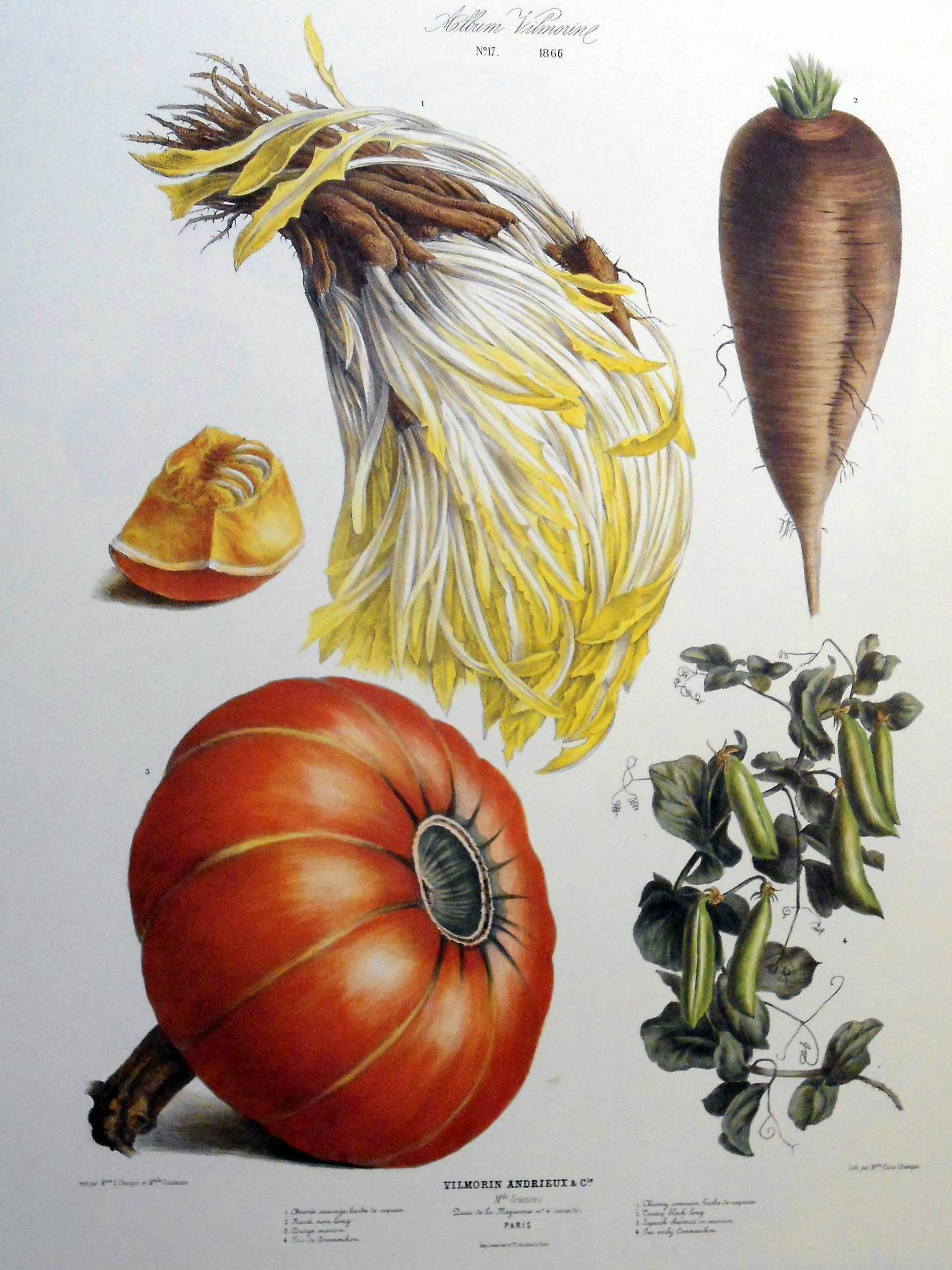
- Image: Album Vilmorin. Le Jardin Potager / The Vegetable Garden (1866)
Add Comment